How long does a red team assessment last?
red team assessment last
Organizations today face increasingly sophisticated cyber threats that require more than routine vulnerability scans or basic penetration testing. Modern attackers often spend days or even weeks researching their targets, identifying weaknesses, and moving through networks without detection. To help businesses evaluate their ability to withstand these realistic threats, many choose to conduct a red team assessment. One of the most common questions organizations ask before planning such an engagement is how long the process typically lasts. The answer depends on several factors, including the size of the organization, the scope of testing, the objectives of the engagement, and the complexity of the environment being evaluated.
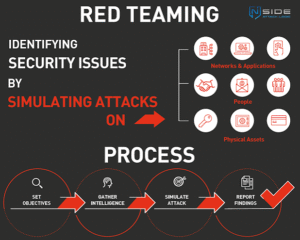
A red team assessment is a controlled security exercise that simulates the tactics, techniques, and procedures used by real-world attackers. Unlike traditional security testing, which may focus on identifying individual vulnerabilities, this assessment evaluates how effectively an organization’s people, processes, and technology can detect and respond to sophisticated attacks. Because the goal is to replicate realistic adversary behavior rather than complete a checklist of technical tests, the duration is generally much longer than many other forms of cybersecurity assessments.
The length of a red team assessment often begins with a planning phase that may take several days or even a few weeks before any testing occurs. During this stage, both the organization and the assessment team establish objectives, define the scope, identify critical assets, determine acceptable testing boundaries, and create rules of engagement. Careful planning is essential because it ensures the assessment remains safe, minimizes disruption to business operations, and aligns with the organization’s security goals. Although this preparation may seem time-consuming, it significantly improves the effectiveness and accuracy of the overall exercise.
Once planning is complete, the active execution phase of a red team assessment commonly lasts anywhere from two to six weeks, depending on the complexity of the engagement. Smaller organizations with limited infrastructure and clearly defined objectives may require only a couple of weeks to complete the simulated attack. Larger enterprises with multiple offices, cloud environments, remote workforces, and extensive networks often require considerably more time. The assessment team must carefully evaluate multiple attack paths while maintaining realistic operational behavior, which naturally extends the duration of the exercise.
How long does a red team assessment last?
One reason a red team assessment typically lasts longer than penetration testing is the emphasis on stealth. Real attackers rarely attempt to compromise systems as quickly as possible. Instead, they spend time gathering information, researching employees, identifying exposed systems, testing security controls, and avoiding detection throughout the attack. Assessment teams intentionally adopt this patient approach to accurately replicate advanced threat actors. Rather than exploiting every vulnerability immediately, they carefully select attack methods that reflect realistic adversarial behavior, allowing organizations to measure their actual detection and response capabilities.
The scope of a red team assessment has a significant impact on how long the engagement lasts. If the assessment focuses only on external infrastructure, the exercise may be completed relatively quickly. However, many organizations request broader evaluations that include internal networks, cloud platforms, wireless systems, physical security, employee awareness, and social engineering campaigns. Each additional component requires careful planning and execution, extending the overall timeline while providing a more comprehensive evaluation of organizational resilience against modern cyber threats.
Social engineering activities can also influence the duration of a red team assessment. Phishing campaigns, telephone-based attacks, and physical access attempts require additional preparation to ensure realistic execution. Evaluators often spend time researching organizational structures, creating convincing phishing messages, developing attack scenarios, and coordinating testing activities. After employees interact with simulated attacks, the assessment continues by evaluating how security monitoring systems, analysts, and incident response teams react. These extended activities contribute to a more accurate representation of real-world attack scenarios while naturally increasing the assessment timeline.
Another factor affecting the duration of a red team assessment is the need to observe security operations over an extended period. Security teams may not detect malicious activity immediately, and sophisticated attackers frequently maintain access to compromised systems for days or weeks before pursuing their objectives. Allowing the exercise to continue over a realistic timeframe enables evaluators to determine whether security monitoring tools generate meaningful alerts, whether analysts investigate suspicious behavior promptly, and whether incident response procedures function effectively under sustained attack conditions. Shorter assessments may not provide sufficient time to evaluate these operational capabilities thoroughly.
Following the active testing phase, a red team assessment includes a detailed analysis and reporting process that may require several additional days or weeks. During this stage, evaluators review collected evidence, document attack paths, analyze defensive performance, and prepare comprehensive recommendations for improvement. The final report typically explains how attackers gained access, which security controls were bypassed, how detection systems responded, and whether predefined objectives were successfully achieved. Organizations also receive guidance for strengthening monitoring capabilities, improving employee awareness, enhancing incident response procedures, and reducing overall cybersecurity risk.
The duration of a red team assessment should never be measured solely by the number of testing days. Its value comes from the realism of the engagement rather than its speed. A carefully planned assessment that unfolds over several weeks provides far more meaningful insights than a rushed exercise completed within a few days. Organizations benefit from realistic simulations that accurately reflect the methods, patience, and persistence used by modern cybercriminals. This approach allows security teams to evaluate their readiness under conditions that closely resemble actual attacks instead of relying on theoretical assumptions.
Regularly scheduling a red team assessment also helps organizations measure long-term improvements in their cybersecurity posture. As security controls evolve, new technologies are deployed, and employees receive additional training, periodic assessments verify whether these changes have strengthened defenses. Conducting assessments at appropriate intervals enables organizations to identify emerging weaknesses, validate previous remediation efforts, and continuously adapt to evolving threat landscapes. This ongoing evaluation supports a culture of continuous improvement while ensuring cybersecurity strategies remain effective against increasingly sophisticated attack techniques.
Ultimately, there is no single timeline that applies to every red team assessment, as each engagement is tailored to the organization’s unique objectives, infrastructure, and security maturity. While the active testing phase commonly lasts several weeks, the complete process often includes planning, execution, analysis, and reporting over a longer period. This extended timeframe allows evaluators to simulate realistic adversary behavior, thoroughly assess detection and response capabilities, and provide actionable recommendations for strengthening cybersecurity defenses. By investing the necessary time in a comprehensive assessment, organizations gain valuable insights that improve resilience, reduce business risk, and enhance their ability to defend critical systems, sensitive information, and essential operations against real-world cyber threats.


